
Efficacy of cleaning and disinfection procedures for controlling Campylobacter contamination in broiler chicken sheds
10 September 2026
Food Microbiology, Volume 142, March 2027
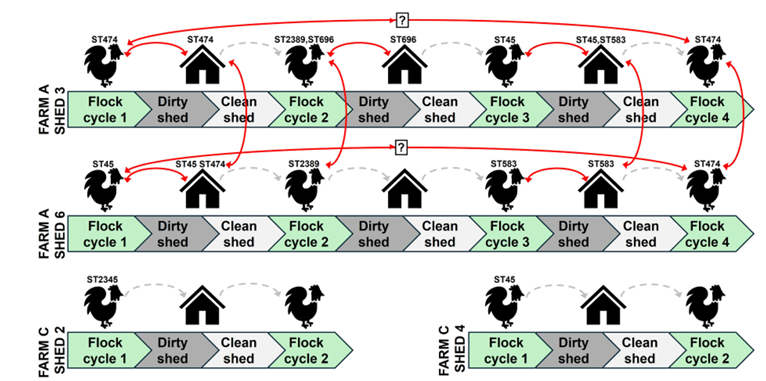
Campylobacteriosis is the most frequently notified foodborne disease in New Zealand, and poultry is the predominant source of exposure. This study assessed the efficacy of current industry cleaning and disinfection approaches for eliminating Campylobacter contamination in broiler poultry sheds and preventing transmission between flocks. Hygiene indicators and cleanout audits identified priority areas for cleanout improvement. Samples were collected from caeca from consecutive flocks, and shed environments before and after cleanout, across two sheds from each of two farms. Samples were tested for Campylobacter by culture, quantitative PCR and presence/absence PCR. Campylobacter prevalence differed significantly (p < 0.001) by sample location, with the highest prevalence from nipple drinkers (20 of 64, 31%) and annex areas (10 of 64, 16%). Prevalence was markedly reduced following cleaning and disinfection (71 of 320 [22%] pre-cleanout samples, versus 3 of 320 [1%] post-cleanout; p < 0.001). Genomic analyses identified seven Campylobacter jejuni sequence types and showed that caecal isolates matched those from the shed environment within the same flock cycle. No genomic evidence of strain carryover between consecutive flocks was detected; however, evidence for trans-shed transmission between concurrent flocks suggests that contamination is primarily driven by within-farm reintroduction rather than persistence between production cycles. Although ten Campylobacter isolates contained the resistance-
associated RE-cmeB allele, there was no evidence that this influenced disinfectant susceptibility. These findings provide novel field-based evidence distinguishing persistence from transmission pathways and highlight that targeting high-risk interfaces and trans-shed transmission routes may be more effective for reducing Campylobacter colonisation than further intensification of cleaning procedures.
View Online Article
View PDF


